

 Yelp
Yelp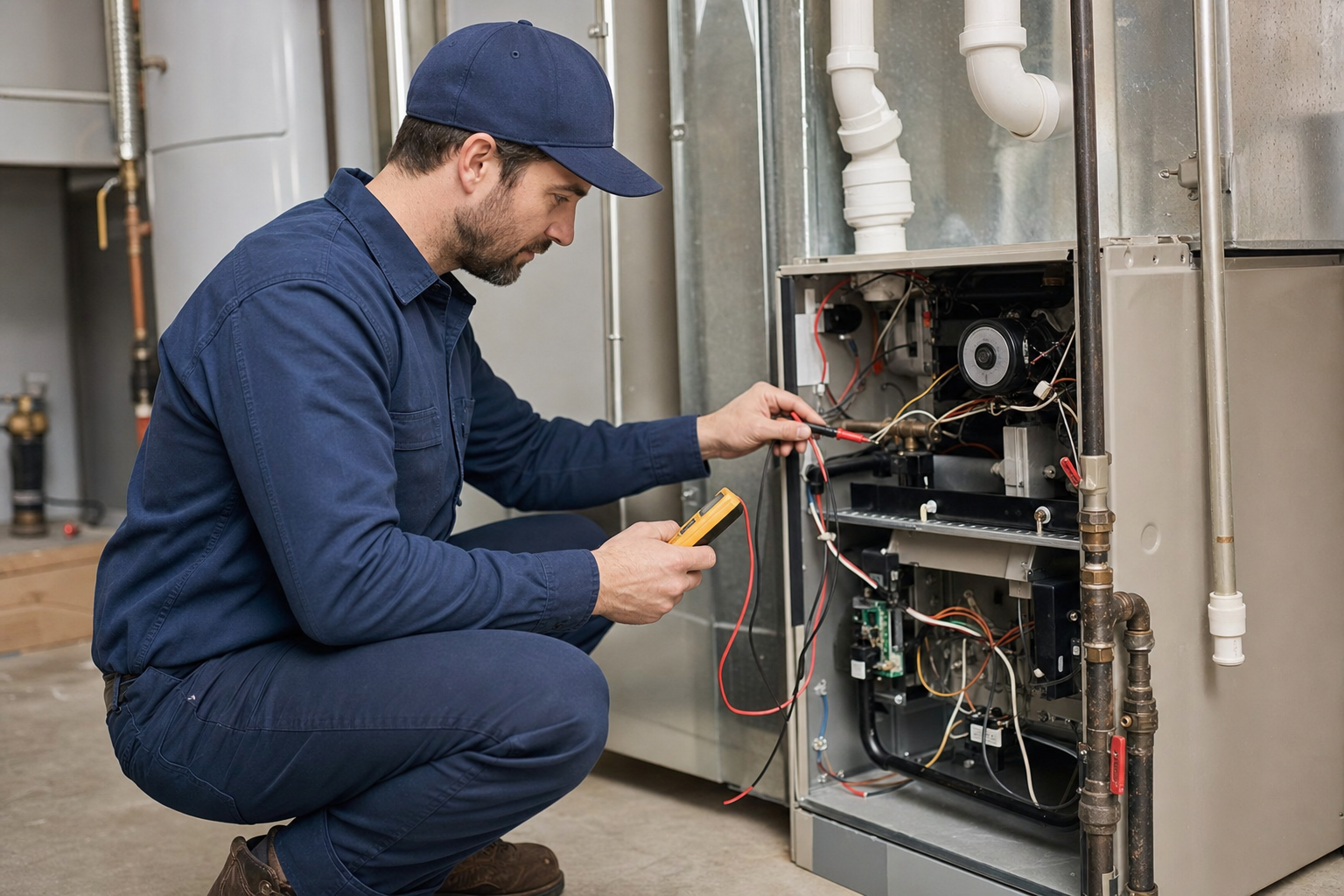
Learn why a furnace may blow cold air, including thermostat settings, ignition problems, airflow restrictions and safety issues.
Start with safe, simple checks
Confirm the thermostat mode and setpoint. Check whether the filter is heavily restricted and make sure supply and return vents are open. These steps help describe the condition but do not replace professional diagnostics.
Watch one complete operating cycle
Note whether the indoor fan and outdoor unit start, how long the system runs, and whether it stops on its own. Sounds, smells, water, ice and thermostat messages are useful clues.
Details to share with the technician
- When the problem began
- Equipment type and approximate age
- Recent filter, thermostat or repair changes
- Any noise, odor, leak or breaker trip
- Which rooms are most affected
When to request HVAC service
If basic settings and airflow checks do not change the symptom, measured testing is the next step. Do not open electrical panels, handle refrigerant components, bypass safety switches or repeatedly reset a tripping breaker.