

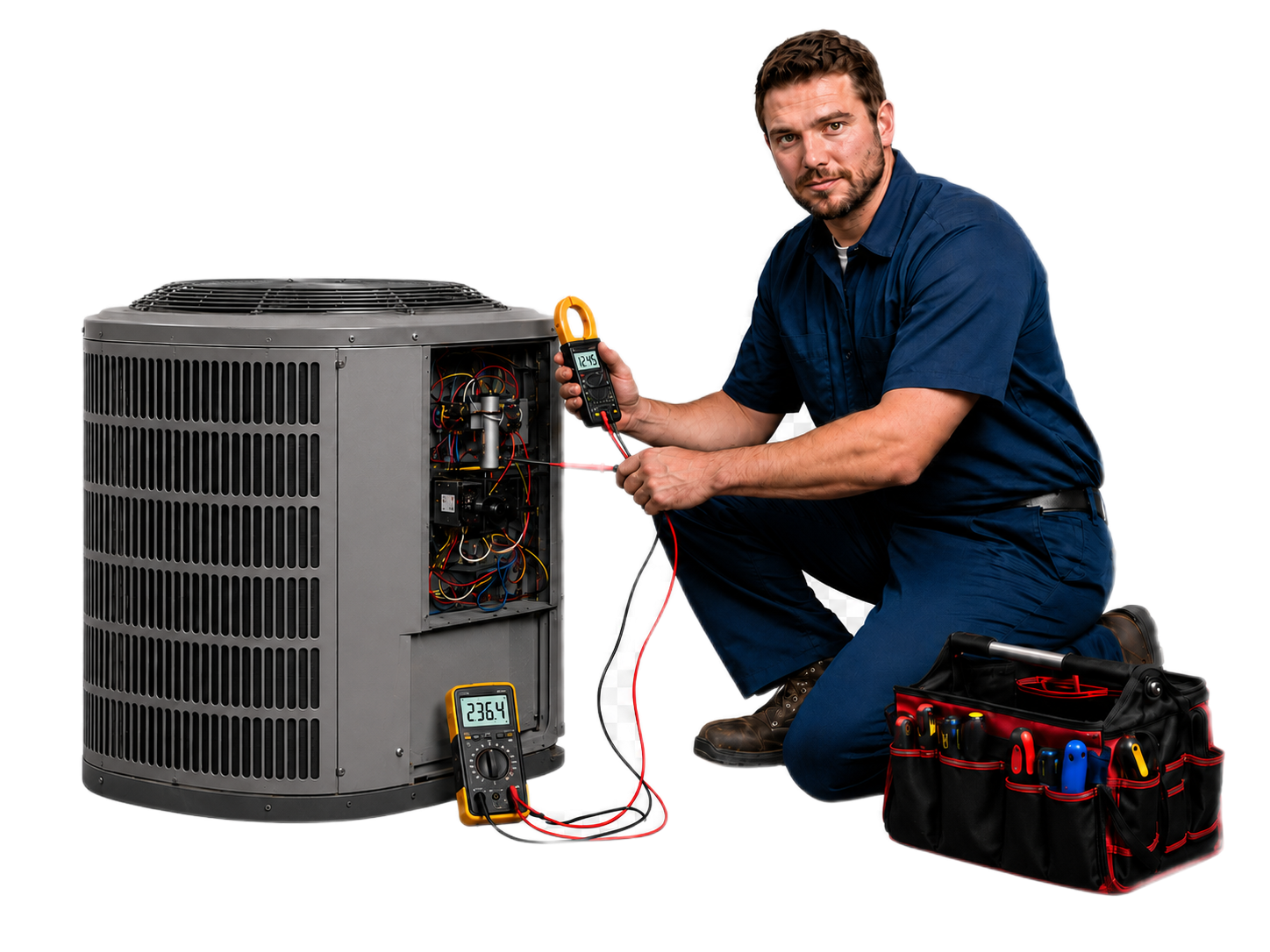
HVAC Installation

Repair or Replace Your HVAC System?

Understand when HVAC repair may be enough and when system replacement may make more sense based on age, repair cost and comfort issues.

One phone numberAbout our companyPrice before work
Repair or Replace Your HVAC System? Price before approved work

General homeowner information, prepared with AI assistance. An on-site professional must confirm the cause and appropriate repair.

Understand when HVAC repair may be enough and when system replacement may make more sense based on age, repair cost and comfort issues.

Gas odor, smoke or a carbon monoxide alarm?

Leave the building immediately. For fire, a CO alarm or immediate danger, call 911 from outside. For a suspected gas leak, contact your gas utility from a safe location. Do not wait for an HVAC callback or try to restart the equipment.

Local gas and carbon monoxide emergency guidance

Key takeaways

  • Equipment age alone does not decide replacement
  • Compare repair scope, reliability and comfort - not only the first price
  • A measured diagnostic should come before a replacement recommendation

Common causes to consider

Several conditions can create a similar symptom. A technician confirms the cause with measurements before recommending repair.

  • Frequent repairs on aging equipment
  • Major compressor, heat-exchanger or coil damage
  • Persistent humidity or uneven comfort
  • Unavailable or obsolete parts
  • A repair cost that is high relative to remaining system life

Safe checks you can do first

Only check accessible controls and filters as directed by the equipment manual. Do not open electrical panels, handle refrigerant or bypass safety controls.

  • Collect recent repair invoices
  • Record model, serial number and approximate installation year
  • Compare energy use and comfort over several seasons
  • Ask for both repair and replacement scope when both are reasonable

When the problem is urgent

For gas odor, a CO alarm, smoke or immediate danger, follow the emergency guidance above. For other equipment faults, stop using the system when safe and contact an HVAC professional:

  • A heat exchanger or combustion problem is unsafe
  • Electrical damage makes operation unsafe
  • The system cannot provide essential heating during severe weather

How to reduce repeat problems

  • Maintain equipment and keep service records
  • Correct airflow and duct issues during replacement planning
  • Review warranty, efficiency and installation details before approval

Related professional service

See our HVAC Installation page for symptoms, diagnostic steps and service-request options.

Repair or Replace Your HVAC System?

Not sure if your AC or furnace should be repaired or replaced? We inspect the system and explain your options.

Repair May Be Better

Good option when the system is still worth fixing.

  • System is not too old
  • Issue is small or local
  • Repair cost is reasonable
  • System worked well before
  • Parts are available

Replacement May Be Better

Good option when repair does not make financial sense.

  • System is very old
  • Repairs happen too often
  • Energy bills keep growing
  • Major part is damaged
  • Comfort problems keep coming back

Need a second opinion?

Schedule diagnostics and we will explain the best option before work starts.

We will call you back during business hours
RELATED GUIDES

Continue reading

More homeowner guides about HVAC symptoms, maintenance and service decisions.

AC Repair

Why Is My AC Not Cooling?

Learn why your AC may not be cooling, including thermostat issues, dirty filters, low refrigerant, weak airflow and when to request service.

Read Article
LOCAL HVAC CALLBACK

Ready to get your HVAC problem checked?

Leave your number. Our dispatcher will confirm the problem, exact address and a convenient visit time.

Repair price before approved work

(206) 208-2010

No online payment. No account needed to submit.